Organizations
Your company's private space in ArchAstro, agents, teams, knowledge, and sign-in all scoped to your organization.
Overview
Your organization is your company's space in ArchAstro. Everything you create lives inside it: agents, teams, threads, knowledge, sign-in rules, integrations.
Other organizations in the same deployment can't see your data, and you can't see theirs.
Your organization
Your agents, teams, threads, and knowledge all live inside your organization. Partner organizations are separate. Shared work is explicit.
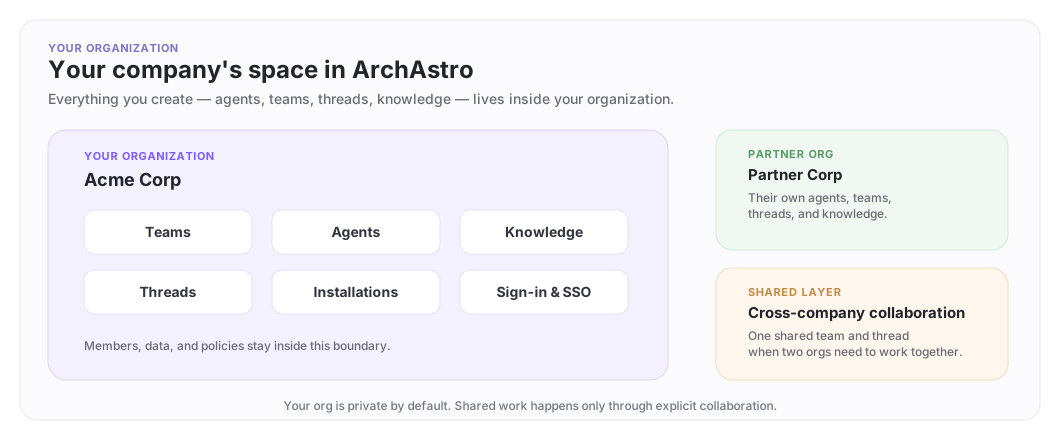
What lives in your organization
| Resource | Scoped to your org |
|---|---|
| Agents | Yes, only your org's members can see and manage them |
| Teams | Yes, team membership is within your org |
| Threads and messages | Yes, conversations stay inside your org |
| Knowledge and sources | Yes, connected data is org-private |
| Sign-in and SSO | Yes, your org has its own login rules |
| Installations | Yes, integrations are org-scoped |
Nothing crosses organization boundaries unless you create a shared collaboration path.
Roles
| Role | What you can do |
|---|---|
| Org admin | Manage members, create agents, deploy configs, manage installations, and set up integrations |
| Org member | Create agents, deploy configs, manage installations, and work with teams and threads |
| Org viewer | Read-only: see agents, teams, and threads without changing them |
Admins and members can build and operate agents; viewers can look but not change. Admins additionally manage org membership and settings.
Sign-in and SSO
Your organization controls how members sign in. Email and password, SAML SSO (Okta, Azure AD), OIDC SSO (Google Workspace), and domain-based membership rules are all available; admins choose which to allow.
Once signed in, ArchAstro scopes your session to your organization automatically. You see your org's agents, teams, and threads, nothing else.
For the full setup, enabling sign-in methods, requiring two-factor authentication, and how the CLI handles all of it, see Sign-in and Two-Factor.
Inspecting your organization
From the CLI:
archastro list orgs
archastro describe org <org_id>
This shows:
- your organization's name, domain, and slug
- current status (active, trialing, suspended)
- member count
Retiring an organization
Deleting an organization is self-service and permanent: archastro delete org <id> removes the organization, its users, and its data in one transaction. There is no export step, so take what you need first.
Where to go next
- Getting Started: deploy your first agent inside your org.
- ArchAgents: collaborate across organizations.
- Sandboxes: test agents in isolation before production.
Need something clearer?
Tell us where this page still falls short.
If a step is confusing, a diagram is misleading, or a workflow needs a better example, send feedback directly and we will tighten it.